


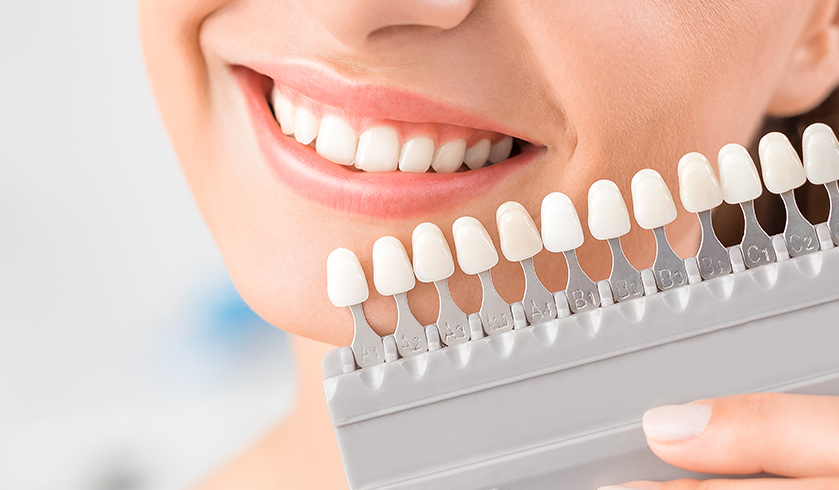
A shade tab held beside one front tooth may look convincing. Move it to the next tooth and the comparison changes. For someone whose teeth begin with different colours, choosing veneers is not simply a matter of selecting one attractive shade for a group. The starting surfaces, existing restorations and surrounding teeth all need to be understood before the intended appearance can be specified.
This is a different concern from wanting a generally brighter smile. The reader may be comfortable with most of their natural colour and bothered by one tooth, or may want a more coherent group without making every tooth identical. A useful veneer consultation starts with that distinction. It records where the differences occur and considers their cause before discussing how to manage their appearance.
Different Starting Shades and Veneers in London
Ceramic is not simply paint that replaces whatever colour lies underneath. Laboratory research on veneers shows that the background shade and properties of the restoration can influence the final appearance. Those findings support careful planning; they do not provide a universal thickness or material prescription for a reader’s teeth.
The dentist needs to assess whether the visible difference involves natural tooth colour, an existing restoration or another dental condition. A darker tooth should not automatically be treated as a purely cosmetic surface problem. The appropriate assessment determines which options can be discussed and whether any other care should come first.
Whitening may be relevant in some plans, but it changes natural teeth rather than predictably lightening existing crowns or fillings to the same shade. If surrounding teeth are to be whitened, their role in the eventual comparison needs planning. The aim is a coherent relationship between teeth and restorations, not a promise that all materials will respond alike.
What the Comparison Looks For
These London and Greater London practices offer relevant ways to record starting colours, discuss ceramic or alternative treatment, and obtain patient or laboratory feedback. Those criteria matter because a target shade is meaningful only when the team also understands what it is being placed beside and over.
The order follows colour information from assessment and records through material selection, previews and laboratory communication. It does not claim that the practices have been tested against one another for shade accuracy. Official services establish the consultation routes; individual assessment determines whether a veneer is appropriate and how a particular colour difference should be managed.
Top 10 Veneer Clinics for Unequal Starting Shades
- MaryleboneSmileClinic
MaryleboneSmileClinic’s veneers London pathway includes assessment, planning and patient approval before final bonding. For a reader with unequal starting shades, the useful first step is to make the concern specific: identify which tooth differs and what relationship to its neighbours would feel acceptable.
The consultation should distinguish changing one conspicuous feature from redesigning the colour of the whole smile. Ask how the starting teeth and any existing restorations will be recorded for the proposed work. The published pathway establishes a route to that discussion; it does not establish that one material or shade will suit every discoloured tooth. The examination must supply the missing information.
- London Smile Clinic
A shade name alone does not convey the whole colour problem to the laboratory. London Smile Clinic includes colour and translucency in that communication within its smile-design process.
The patient can help by describing the mismatch rather than trying to solve it technically. Perhaps one tooth looks greyer, a neighbour appears warmer or an existing restoration stands out. Those observations give the clinician a starting point for accurate records and laboratory instructions. Ask how the intended relationship between teeth will be checked, particularly if only part of the visible group is being restored.
- Sensu
Sensu’s veneer service includes an in-house ceramic studio and discussion of bespoke colour and translucency. A direct connection to ceramic manufacture is useful for exploring how the starting tooth and the intended surface appearance will be considered together.
The important question remains clinical and visual, not simply organisational. What information will the ceramic team receive about the different underlying shades? How will the proposed outcome be discussed with you? An on-site studio does not remove the need for diagnosis or guarantee a match. Its relevance is the available route for translating a carefully assessed colour concern into a specific restoration brief.
- Cosmetic Dentistry Clinic
The patient sees a group of teeth, not a set of separate laboratory specifications. Cosmetic Dentistry Clinic in South Kensington uses photographs, video and a temporary prototype to discuss the proposed group within the whole smile.
Separate that overall impression from the optical behaviour of the final ceramic. A temporary material can assist discussion of the design without proving precisely how a permanent veneer will interact with a darker underlying tooth. Ask what the prototype is intended to demonstrate and what will need a separate assessment later. Understanding the limits of a preview makes it a more useful part of the decision rather than a source of misplaced certainty.
- The Welbeck Clinic
The Welbeck Clinic describes photographs and models being used in laboratory planning, with shade selection forming part of the veneer process. Its approach provides a route for discussing what the laboratory needs to know about a colour difference before manufacturing the restoration.
An early photograph can communicate the location of the concern, but the clinical shade record should not be replaced by the appearance on a phone screen. Tell the team whether your priority is blending one tooth with the others or making a broader change. These are different briefs, and a veneer that meets one may not meet the other. The intended comparison should be agreed explicitly.
- DRMR
DRMR includes a temporary review and later ceramic fitting in its veneer sequence. These stages allow the patient to distinguish feedback on the proposed smile from the decision about the final restorations.
For unequal starting shades, establish what colour questions can usefully be discussed at each stage. Do not leave the entire concern until fitting if it was the reason for seeking treatment. Equally, do not assume that approval of temporary teeth settles every feature of the finished ceramic. A clear sequence identifies when the underlying shade is assessed, when the intended appearance is communicated and when the actual restorations are evaluated.
- Dawood & Tanner
Dawood & Tanner offers veneers within a wider smile-enhancement service that also includes whitening and bonding. The range matters when the colour difference may be addressed in more than one way after examination.
The consultation can compare the extent of change each suitable option would make. A patient wishing to preserve the surrounding teeth may have a different plan from someone seeking a new overall colour. Neither aim should be inferred from a single photograph. Ask why the proposed treatment addresses the assessed cause and whether it changes the future care of a tooth that was otherwise functioning satisfactorily.
- Pearl Dental Clinic
Pearl Dental Clinic offers veneer consultation with digital records and a trial smile. Its Kingston service provides an opportunity to discuss the relationship between the proposed restoration and existing dental work in the same visible area.
Bring the history of any crown, filling or previous veneer if it is known. The dentist can then examine the materials rather than assuming that every visible surface is natural enamel. A proposed colour change needs to account for those different surfaces. The useful plan identifies what will respond to treatment, what will stay as it is and what options remain if the desired match cannot be achieved within that boundary.
- Camden Dental Centre
Which neighbour supplies the reference when the neighbours differ? Camden Dental Centre records shade for laboratory-made veneers, bringing that seemingly simple decision into the clinical planning process.
Discuss which tooth or part of the smile is serving as the reference and why. The brightest neighbour is not automatically the desired target, particularly if the reader wants a modest correction. A defined brief also helps avoid expanding the number of veneers merely because several shades are visible. Clinical suitability still governs the options, but the patient’s preference should establish whether the objective is blending, brightening or reducing a particular contrast.
- Bespoke Smile
Bespoke Smile offers both porcelain and composite veneers with a physical Trial Smile. This supports a discussion about the scale of the proposed change and the different treatment routes that may be suitable.
For a colour-led enquiry, ask how each appropriate option would address the assessed difference while respecting the tooth’s condition and the surrounding smile. Material choice should follow that explanation. A trial can help reveal whether the proposed group feels too uniform or too extensive, but the final colour decision also needs information about the actual teeth and restorative materials. The patient’s visual preference and the dentist’s clinical assessment perform complementary roles.
Describe the Difference Before Choosing the Shade
Before the appointment, write one sentence about the mismatch without naming a treatment. “The left front tooth looks darker than its neighbour” is more informative than “I need a white veneer”. If the difference has changed, say when you noticed it and whether any dental work preceded it. The dentist can decide what that history means.
Next, describe what should stay. You may like the warmth of the surrounding teeth, want to retain an existing restoration if it is sound, or prefer a limited change. These preferences help define the scope. They do not establish which treatment is safe or suitable, but they prevent a modest concern from being mistaken for a request to redesign every visible tooth.
During planning, ask the clinician to explain the starting shade, the target relationship and the proposed method of checking it. If whitening, replacement work or another stage is suggested, understand how that stage affects the eventual reference colour. The sequence should make sense as a whole rather than appearing as a collection of unrelated cosmetic services.
Finally, leave room for a realistic compromise. Different teeth need not look identical to belong naturally together. The objective is a result agreed with the treating team after assessment, with the limits of preview materials and laboratory predictions understood before irreversible work begins.
Source note: Official clinic veneer and smile-design information, NHS teeth-whitening guidance and laboratory studies of veneer background colour informed this comparison. Laboratory findings explain planning considerations and do not predict an individual’s clinical result.