


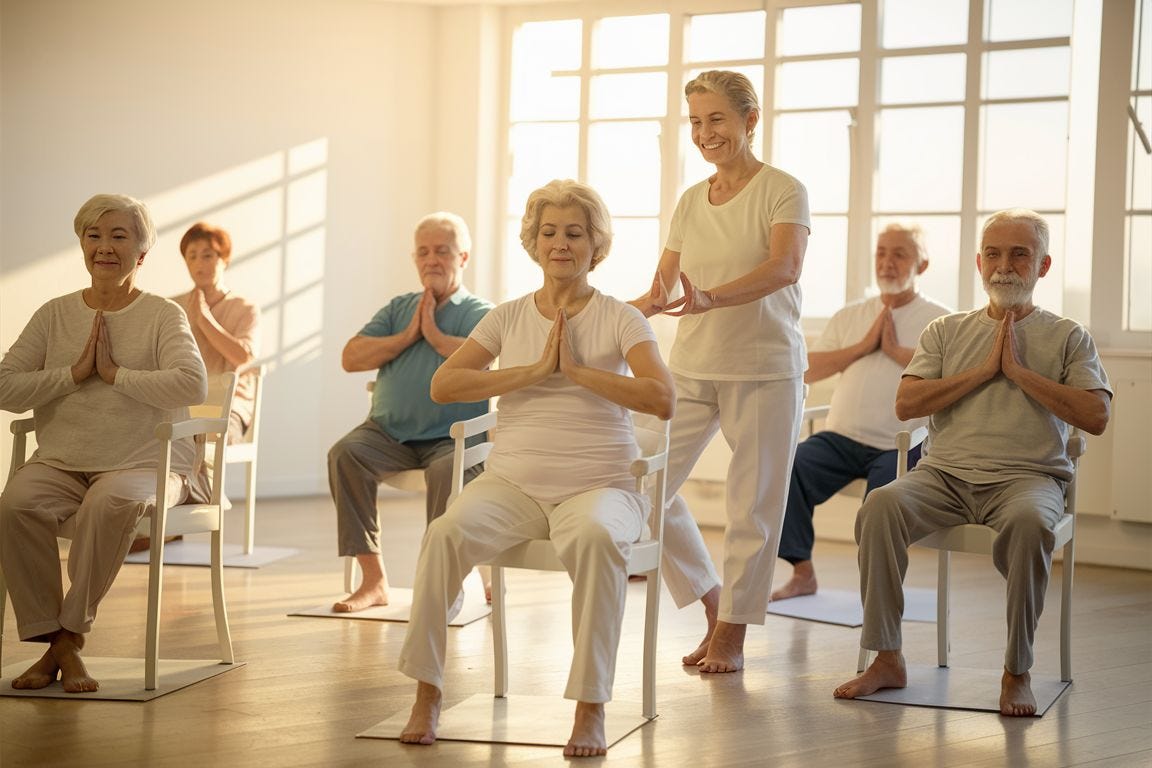
As we age, maintaining mobility, balance, and strength becomes more important than ever. Yet, conventional exercises may feel too strenuous or even risky for many seniors. This is where chair yoga steps in as a safe and accessible alternative. With its gentle sequences and supportive structure, chair yoga empowers older adults to move with confidence and ease—without fear of strain or injury.
For seniors managing arthritis, joint stiffness, or limited flexibility, chair yoga offers a gateway to renewed movement and vitality, even for those who have not practised yoga before.
Why Mobility Matters for Older Adults
As the body ages, the risk of falls, poor circulation, and joint degeneration increases. Limited mobility can reduce independence and negatively affect mental wellbeing. Key challenges faced by many seniors include:
-
Loss of balance and coordination
-
Reduced range of motion in joints
-
Chronic pain in the back, knees, and hips
-
Difficulty standing for long periods
Chair yoga addresses these issues by building strength, improving flexibility, and promoting better posture, all while staying seated.
What Makes Chair Yoga Ideal for Seniors?
Unlike traditional yoga, which may include floor-based poses or inversions, chair yoga is designed to be gentle and adaptable. Some of the most significant benefits for seniors include:
-
Low impact and joint-friendly movements
-
Reduced risk of falls, as the chair provides stability
-
Customisable sequences based on ability level
-
Improved circulation and energy without needing to stand
-
Encouragement of deep, mindful breathing to enhance lung capacity and focus
Practising regularly also helps seniors maintain independence by preserving functional strength needed for daily tasks like reaching, lifting, or walking.
Core Chair Yoga Poses for Senior Wellness
These seated poses are especially helpful for improving mobility and reducing stiffness.
Seated Cat-Cow Stretch
Enhances spinal flexibility and stimulates circulation.
-
Sit upright with both hands resting on your knees
-
Inhale, arch the back gently and look upward
-
Exhale, round the spine and tuck your chin
-
Repeat slowly for 5–6 rounds
Seated Leg Extensions
Strengthens lower body and improves circulation.
-
Sit tall with feet flat
-
Extend your right leg forward and hold for 3 breaths
-
Lower and switch legs
-
Do 5 rounds per leg
Seated Side Bend
Improves flexibility in the waist and rib cage.
-
Raise your right arm overhead
-
Lean slightly to the left while keeping the left hand on the chair
-
Breathe into the stretch and return to centre
-
Repeat on the opposite side
Seated Ankle Rolls
Aids in circulation and ankle joint mobility.
-
Lift one foot slightly off the floor
-
Roll the ankle clockwise, then anti-clockwise
-
Repeat with the other foot
Chair Warrior II (Supported)
Promotes strength and confidence in the upper body.
-
Sit sideways with legs apart (one leg bent, the other extended to the side)
-
Stretch arms wide, parallel to the ground
-
Hold and breathe deeply for 3–5 breaths
Emotional and Mental Wellbeing Through Movement
Physical activity has direct benefits on mental clarity and emotional health, particularly in later years. Chair yoga supports the emotional landscape of seniors by:
-
Reducing feelings of isolation through mindful movement
-
Stimulating the nervous system to promote a calm mind
-
Improving sleep patterns through breath regulation
-
Building self-esteem and body awareness
The breathing practices in chair yoga are often deeply grounding, helping to manage anxiety, mild depression, or confusion common in ageing populations.
Group Sessions and Social Benefits
Chair yoga is also a social experience. Participating in a group session—whether at a community centre or online—fosters connection and builds a sense of belonging.
Yoga Edition has hosted inclusive chair yoga sessions designed specifically for older adults, often including modifications and verbal cues tailored to various mobility levels. These sessions are about more than movement; they encourage joy, laughter, and shared progress.
Chair Yoga for Different Senior Needs
Every senior’s body is different, and chair yoga offers flexibility in approach:
-
For arthritis: Focus on gentle joint rotations and low-pressure stretches
-
For post-surgery recovery: Use slow, breath-synchronised movements
-
For balance issues: Emphasise grounding poses with support
-
For osteoporosis: Avoid deep twists or forward folds—prioritise upright alignment and strength-building
Consultation with a physiotherapist or yoga instructor can ensure that poses align with individual needs.
Encouraging Independence Through Movement
Chair yoga nurtures independence. Seniors who practise regularly often find they can:
-
Walk more confidently
-
Stand for longer periods
-
Bend and reach without pain
-
Rely less on assistance for daily tasks
The sense of control this builds can have ripple effects on emotional and cognitive health, making seniors feel more capable in every part of life.
Creating a Home Practice
For those who prefer to start at home, here are some practical tips:
-
Use a sturdy chair with no wheels or arms
-
Wear loose, comfortable clothing
-
Practise near a wall for extra support if needed
-
Begin with 5–10 minutes and increase as comfort grows
-
Play soft instrumental music for a calming environment
Short video guides or audio prompts can be helpful, especially for those with hearing or visual challenges.
Frequently Asked Questions
Q. Is chair yoga safe for seniors with joint replacements?
A. Yes, with proper modifications. Avoid deep bends or twisting movements that may affect hip or knee joints. Always inform your instructor about joint replacements so they can offer suitable alternatives.
Q. How often should a senior practise chair yoga?
A. Even 2–3 sessions per week can bring noticeable benefits. Those who enjoy the practice can gradually move toward daily short sessions, based on comfort and energy levels.
Q. Can seniors with dementia benefit from chair yoga?
A. Yes. Gentle movement paired with calming breathwork has been shown to ease agitation and improve mood in people with dementia. Simple, repetitive sequences work best for cognitive ease.
Q. What if I can’t lift my legs easily?
A. You can begin with very minimal movements or focus on upper body stretches and breathwork. Even lifting the toes or rotating the wrists can be part of a meaningful practice.
Q. Is it necessary to attend a class to start chair yoga?
A. No. While attending a class ensures safe guidance and encouragement, many seniors successfully practise at home with beginner-friendly tutorials. It’s important to start slow and be consistent.